Paper Stamp Cards Are Costing Your Shop More Than You Think
Paper stamp cards are familiar, but lost cards, reprints, and counter friction add up. Compare the benefits and trade-offs of going digital—and why wallet-based loyalty cards can be a simple place to start.

For Shops That Want to Stop Using Paper Loyalty Cards: Pros and Cons of Going Digital
Paper loyalty cards have been around for a long time for a reason. They are simple, familiar, and easy for customers to understand: buy a coffee, get a stamp; fill the card, get a reward.
But for many small shops, the classic paper loyalty card or paper stamp card starts to create hidden costs over time. Cards get lost. Staff need to manage stamps. Shops need to print more cards. Customers forget to bring them. And in some cases, paper cards can be misused.
If you are thinking about replacing your paper loyalty card with a digital loyalty card, here are the main benefits, trade-offs, and why a wallet-based card can be the easiest place to start.
The Common Problems With Paper Loyalty Cards
1. Customers Lose Them
The biggest problem with a paper stamp card is simple: customers lose it.
A loyal customer might visit your shop many times, but if they forget their card, lose it, or accidentally throw it away, the loyalty experience breaks. Some customers ask staff to combine multiple cards. Others give up entirely.
For the shop, this creates an awkward moment. Do you trust the customer and give extra stamps? Do you say no? Either way, the paper card has created friction.
2. Printing Costs Add Up
A paper loyalty card feels cheap at first, but it still has a cost.
You need to design it, print it, reorder it, and sometimes update it when your offer changes. If you run multiple campaigns, seasonal rewards, or different cards for different locations, the cost and complexity grow.
A digital loyalty card can reduce or remove the need for repeated printing. Updates can happen online instead of through another print run.
3. Inventory Management Is Annoying
Paper cards are physical inventory.
Someone has to check whether you have enough cards at the counter. Someone has to reorder before they run out. Staff need to know where the cards and stamps are kept. If you operate more than one location, each location needs enough supply.
This is not a huge task, but it is one more small operational detail in an already busy shop.
4. Fraud and Misuse Are Hard to Prevent
Paper stamp cards are based on trust.
That is part of their charm, but it is also a weakness. Cards can be stamped incorrectly, copied, shared, or filled outside the intended process. Staff may accidentally give too many stamps. A customer may bring in a card that is difficult to verify.
Most small shops do not need enterprise-level fraud prevention. But they do need a loyalty system that is clear, consistent, and not too easy to abuse.
Paper Loyalty Card vs Digital Loyalty Card
A paper loyalty card is easy to understand and does not require technology. That is its biggest strength.
A digital loyalty card, however, gives shops more control and makes the experience easier to manage over time.
With a digital card, customers do not need to keep a physical card in their wallet. Shops do not need to print and reorder cards. Staff can issue stamps through a more consistent process. Rewards can be tracked more clearly.
The trade-off is that some digital loyalty systems add too much friction. If customers need to download an app, create an account, confirm an email, or remember another password, many of them will not bother.
That is why the type of digital loyalty card matters.
Why Wallet-Based Loyalty Cards Are Often the Easiest Option
For many small shops, the best digital loyalty card is not a full mobile app. It is a wallet-based card.
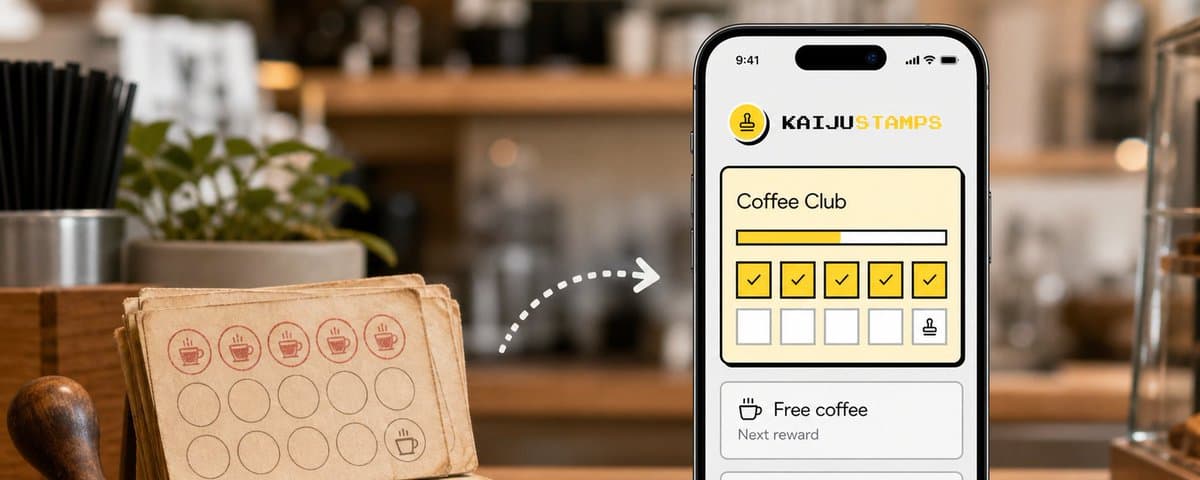
A wallet-based loyalty card can be saved to Apple Wallet or Google Wallet. Customers already know where their wallet cards live. They do not need to download a separate app just to collect stamps. They do not need to create a customer account before getting started.
This makes the experience closer to the old paper stamp card:
- Customer scans a QR code.
- Customer saves the card to their phone wallet.
- Staff issue stamps when the customer visits.
- Customer redeems the reward when the card is full.
The shop gets the benefits of a digital loyalty card, while the customer still gets a simple experience.
The Benefits of Moving From Paper to Digital
Switching from a paper stamp card to a digital loyalty card can help shops in several ways:
- Fewer lost cards
- Lower printing costs
- Less physical inventory to manage
- More consistent stamp issuing
- Clearer reward tracking
- Easier updates to card design or campaign rules
- A smoother experience for repeat customers
For cafes, salons, bakeries, food trucks, and local retail shops, these small improvements can make loyalty programs easier to run day to day.
The Downsides to Consider
Digital is not automatically better.
Some customers may still prefer paper. Some staff may need a short adjustment period. If the system is too complicated, it can slow down service instead of improving it.
That is why a digital loyalty card should be lightweight. It should not require customers to install another app. It should not force staff to manage a complex dashboard during a busy shift. It should make the existing workflow easier, not heavier.
A Practical Way to Start
If your shop wants to stop using paper loyalty cards, start with a simple question:
What part of the current card causes the most friction?
If customers often lose cards, digital helps. If printing and restocking cards is annoying, digital helps. If staff are unsure how to handle stamps and rewards, digital can make the process clearer.
A wallet-based digital loyalty card is often the easiest first step because it keeps the familiar stamp card concept while removing many of the problems that come with paper.
Final Thoughts
The paper loyalty card is not a bad idea. It became popular because it is simple and effective.
But today, shops can keep that same simple idea without relying on paper cards, manual inventory, and loose stamps behind the counter.
A good digital loyalty card should feel like the classic punch card, but easier to keep, easier to manage, and easier to trust.
That is the idea behind kaijustamps: wallet-based stamp cards for small shops that want loyalty without paper cards, customer accounts, or extra app downloads.