Why Do We Love Collecting Stamps?
From shop loyalty cards and event stamp rallies to Japan's summer exercise cards, collecting stamps turns repeated actions into visible progress, memorable experiences, and reasons to return.

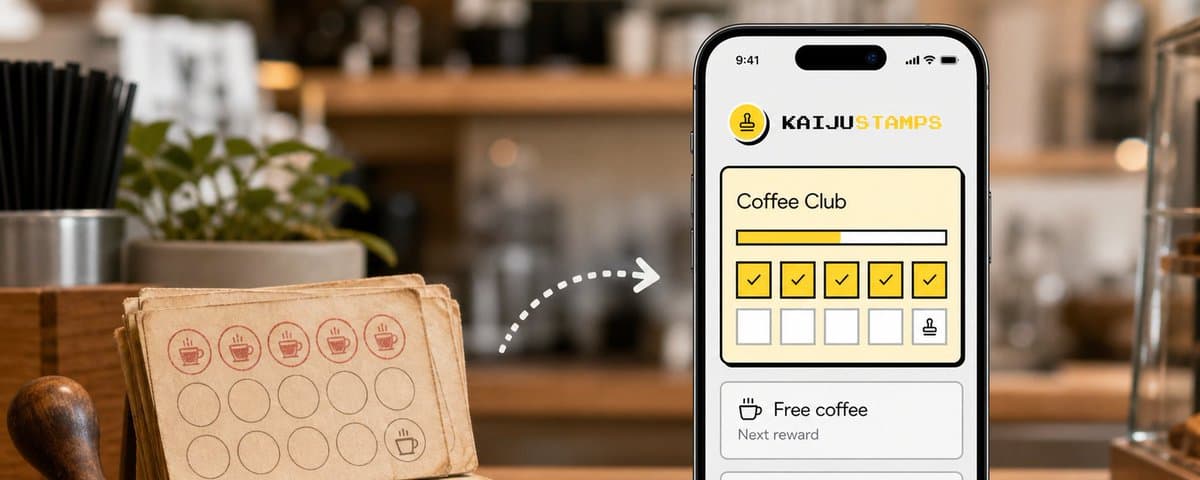
Open a convenience store app and you may find more than coupons. Buy an eligible item, collect a set of digital stamps, and you might unlock a reward or a chance to enter a prize drawing.
At cafés and salons, repeat visits can lead to a free drink or a service on your next visit. Other businesses use points or stamps in their own ways, following the rules that fit their shop and industry.
The businesses and rewards may differ, but these programs share a simple idea:
Instead of letting the relationship end after one purchase, they leave customers with a visible reason to come back.
The first stamp creates a reason for the next visit
Once a customer receives the first stamp, they have made a small amount of progress.
The reward may still be several visits away, but the card is no longer empty. There is now a clear distance between where they are and what comes next. That can give them one more reason to choose the same shop again.
The value is not only in the price of the reward.
Watching a card fill up creates its own small sense of accomplishment. Each new mark makes progress visible.
For a shop, a stamp or point card can turn that visible progress into a familiar rhythm of repeat visits.
In a stamp rally, collecting becomes the experience
Stamps do more than encourage customers to return to a shop.
At an event or theme park, a stamp rally can become part of the experience itself.
People stop at places they might otherwise pass. They walk to the far side of the venue. They look at a map for the one checkpoint they have not found. Families and friends ask each other where they should go next.
Placing stamps around a venue gives visitors both a reason to explore and a loose path to follow. When the card is complete, it holds more than a set of marks. It also carries memories of the walking, searching, and conversations along the way.
The prize at the end may be part of the fun, but it is not the whole value. The act of collecting helps people discover the event itself.
A summer exercise card is a stamp card too
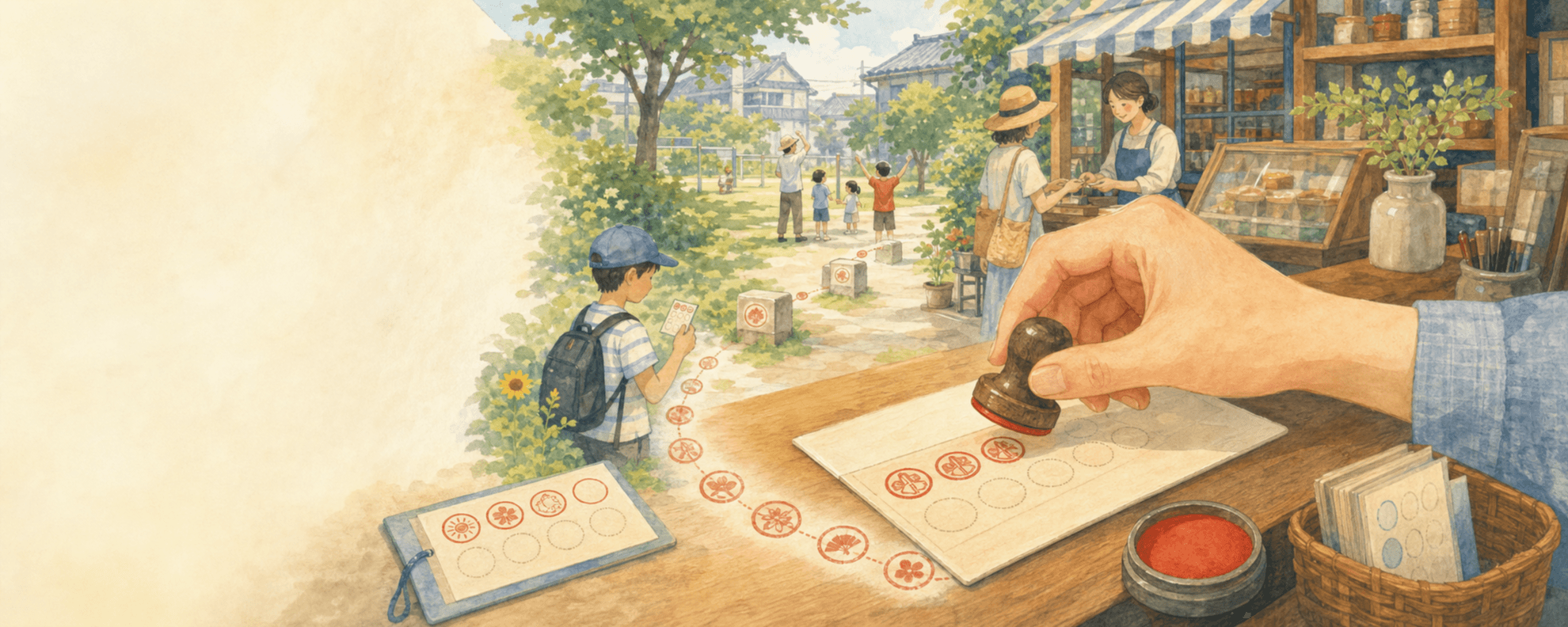
In Japan, many children take stamp cards to early-morning radio exercises during the summer holidays.
The routine is simple: wake up, walk to the local park, exercise with the neighborhood, and receive a stamp on the card.
As the marks begin to line up, yesterday's effort becomes visible. An empty space gives you a reason to return the next morning. By the final day, the completed row of stamps is a record of the routine you managed to keep.
There does not need to be a lavish prize. Filling the next space can be satisfying on its own. Seeing friends continue can encourage you to keep going too.
The card does more than record attendance. It helps turn a repeated action into a summer habit.
Loyalty campaigns make the goal concrete
Shops can apply the same idea to a limited-time loyalty campaign.
For example:
- Visit two more times to receive a reward
- Try three eligible products this month to earn a bonus
- Collect stamps from several areas of a venue
- Complete the card during the campaign to enter a prize drawing
A concrete goal can add a small amount of play and anticipation to an ordinary purchase.
More conditions do not necessarily make a campaign more engaging, though.
Customers lose interest when they cannot tell when a stamp is earned, when too many exclusions apply, or when joining takes too long. Staff struggle too when the rules are difficult to explain at the counter.
Before increasing the value of the reward, ask whether the way to earn it can be explained in one sentence.
A shop card can carry the memory of a place
Not every card needs points or a reward.
A small shop card tucked into a purchase can help someone remember the name of the store and the moment they chose the item.
When the purchase is a gift, the card can also become a quiet message about where the gift was found. It may prompt the recipient to look up the shop later or visit it themselves.
If a stamp card leaves someone with a reason to return, a shop card leaves them with a reason to remember.
The two serve different purposes, but both create a small connection that lasts beyond the moment of payment.
Four principles for a stamp card people can keep using
Whether it is used in a shop, at an event, or during a campaign, a clear stamp card usually has four things in common.
1. People understand how to earn a stamp
The action should be easy to describe: one visit, one purchase, or one eligible item. If customers need to study a long list of conditions, joining starts to feel like work.
2. Progress is visible
Customers should be able to see how many stamps they have and how far they are from the goal. “Almost there” is part of the pleasure of collecting.
3. The reward feels appropriate
It does not need to be extravagant. It should simply feel worthwhile in relation to the number of visits or purchases required.
4. The program works at the counter
A program can be clear to customers and still be difficult for a shop to run. Think through how staff will issue the card, add stamps, and provide the reward—especially during the busiest part of the day.
Stamp cards make time visible
Shop loyalty cards, event stamp rallies, summer exercise cards, and simple shop cards all serve different purposes.
But each creates a small marker in a person's activity. It leaves behind progress, a memory, or a reason to take the next step.
A stamp card is more than a discount mechanism.
For a shop, it can be a way to thank someone for returning. For the person carrying it, it becomes a small record of the time and visits they have accumulated.
That may be why the habit of collecting stamps has lasted across both paper and digital formats.
If you are planning a stamp card for your shop, begin by writing down four answers:
- What action earns a stamp?
- How many stamps complete the card?
- What does the customer receive at the end?
- Who handles each step at the counter, and how?
If you can explain all four answers clearly, you have the foundation for a stamp card that both customers and staff can understand.
Is there a stamp card you still remember?